Bicycles By Numbers
June 17, 2026
My brother collects antique clocks, my sister books, and me, I collect bicycles. I can pin my collecting down to a single event, watching James Coburn riding to freedom on a bicycle in that UK Christmas TV favorite, The Great Escape.
Escape was my preoccupation before Christmas in the year I turned seven. I needed to get home!
That was the year when my mother and father took a radical decision. They were concerned at my poor reading, writing, and arithmetic in the state system. My mother had retrained as a teacher and was appalled at the educational innovations being tested out on us at primary school.
I think her heart was in the right place.
I was learning to read and write using a novel system called the Initial Teaching Alphabet (‘ITA’). I enjoyed reading books written in it so much that I rapidly exhausted the available stock the school held.
I could not read any of the dozens of childrens books that were brought home from the library for me, even though like you, I can readily guess the meaning of each strange word as an adult. Normal English is one of the hardest languages to read and learn, and I wasn’t given any of the mechanisms I needed to make sense of the vast quantity of written English around me. The pathways had not been formed, and in fact this turned out to be the great failing of ITA - it was very hard to undo the damage it did to young readers.
Soon I had outgrown the stock of Ladybird books in our local library and stopped reading for lack of material. Something had to be done.
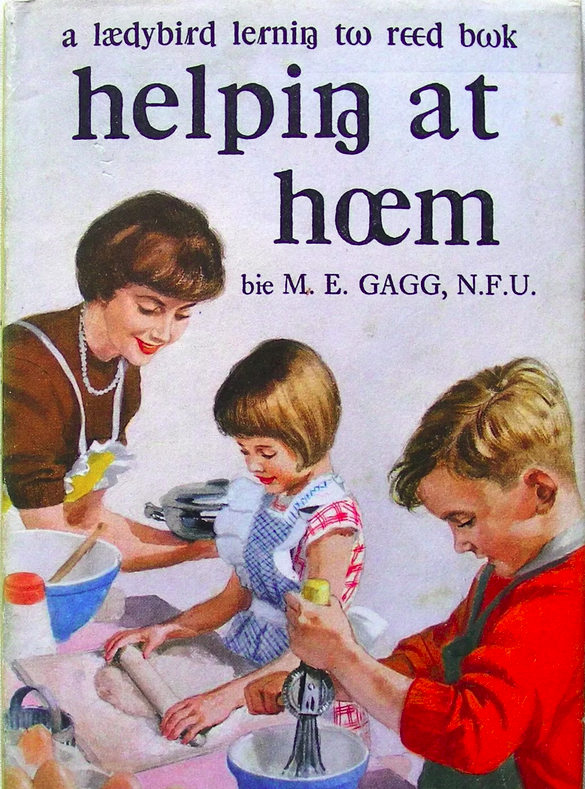
What they did had a profound impact on my life: they sent me off to have my writing and reading and arithmetic sorted out at a proper Prep School, called Belmont School, the junior school to Mill Hill School on the Ridgeway, London NW7.
My father was careful to preserve correspondance for the whole of my education ; and it makes for gloomy reading. Nearly the first letter is from the headmaster of Belmont School, Mr. Peter Foster, explaining that a place can be found for me for the autumn term, but that I’ll have to come to the school as one of its 110 boarding pupils, places for day pupils having been awarded for good academic performance.
My parents were not daunted, since my being a border meant that they could both continue to work full time. And they were well enough off from my father’s government pension from his previous career at the East African Trypanosomiasis Research Organisation in Tororo and Nairobi to be able to afford the fees. In fact my brother had been to the same school 18 years before me, and this must have been a factor in the decision - several of the staff that taught him were still teaching there, and he had done well enough academically to get into medical school from Belmont and Mill Hill school.
I was kept in the dark about all of this until a couple of weeks before the start of the autumn term, when I was taken to a London department store to get kitted out with everything a boarder would need, from a boiler suit (worn over sports gear when playing out in the woods at the school) to boot brushes (for polishing the two pairs of shoes I was sent with, with my school number 118 marked in small tacks under the instep on both pairs).
The itemised list was gradually ticked off, culminating in the arrival of a stout wooden tuck box with a padlock and key, in which my personal effects that I wasn’t wearing were stored. This may sound odd, but the tuck box and its untouchable contents (staff and other boys were very conscious of this rule) were the main thing that stood between my experience of being sent away to school, and the equivalent experience of older men being drafted into National Service or Army basic training. It was difficult to transition from what I took to be the loving environment of home to sleeping in a bunk bed in a dormitory with eleven other lost boys in the first three weeks of term. No telephone calls were allowed, no visitors were allowed, and by the end of the first week I had genuinely discovered what home sickness feels like, along with the shock of going from the top of the class at reading and writing in my state school to the very bottom of the class, where I was barely literate. Maths was even worse for me, as was having to form joined up writing with a dip pen and an inkpot on my desk. For the 1970s, the school was remarkably consistent with its values and methods from the post-war years.
Although the immediate urge to run away was tempered by the border fences around the estate and warnings about guard dogs patrolling, a couple of kids did manage to slip away, notably Hank Marvin’s sons who were probably going through a far worse time at home than I ever was. But they were brought back pretty speedily.
So the special moment came on the very last day of the winter term when we were all gathered into the blacked-out gymn hall on low benches to watch Mr Kirkham screen a real film on a real film projector with proper sound - the Great Escape.
This film was the highlight of the year for us. We lived in a small isolated community with no radios, television, or newspapers, so watching a film was a really big deal to us. If you ask anyone who has seen the film what the best scene is, they’ll tell you about Steve McQueen’s attempt at jumping the border fences on a BMW motorbike; I could see that he was just drawing attention to himself and was going to fail. As were the other escapers who chose to escape by train. I was captivated instead by James Coburn, whose character Sedgwick, “The Manufacturer”, quietly frees a bicycle from a bike stand and rides it all the way through France to the border with Spain with the odd friendly wave to people he meets along the way. The bike isn’t in the film for more than twenty seconds but it made a big impression on me.
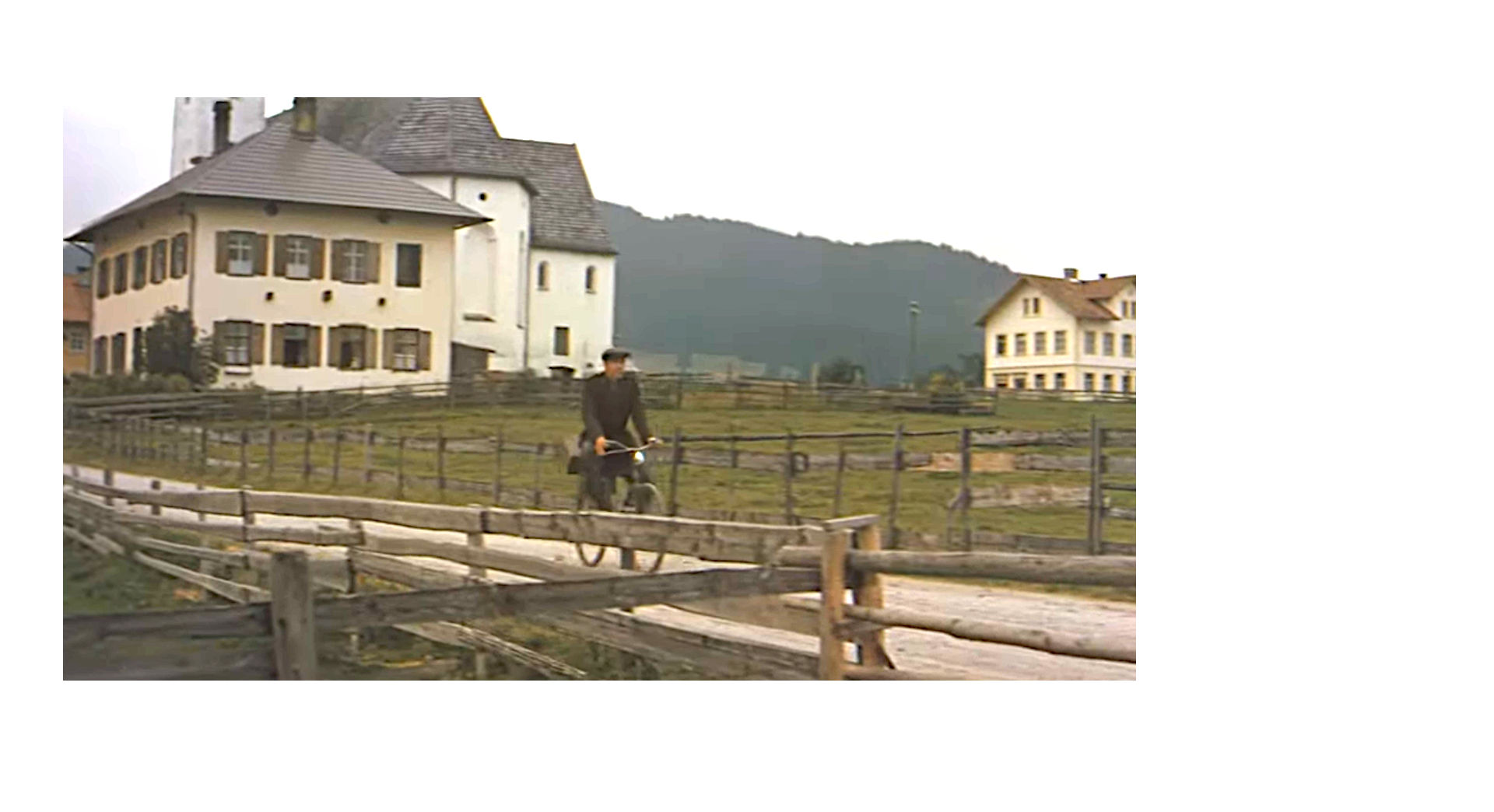
Although the opportunity to cut through a chain and elope with a bicycle from Belmont never presented itself, the seed of the idea was implanted, and reinforced each year subsequently, because the school only had the one film, and it was shown at the end of every term just before we were released for the holidays to our parents.
There’s a good article on the rise and fall of the Initial Teaching Alphabet from the Guardian newspaper here - the comments are interesting too.
The bikes, and their numbering:
| # | Frame Builder/Model | Dates | Description |
|---|---|---|---|
| 1 | Eclipse | 1986-91 | First touring bike in 531 ST with front and rear panniers; perfect for five holidays and for our Loire-Dordogne tour in ‘89. Written off in collision with parked car on a street in Brive, France, caused by me looking for change in my handlebar bag.spite other characteristics being essentially unchanged. |
| 2 | Bickerton Classic | 1976-2017 | Known derisively in the trade as "The Aluminium Noodle"; bought by my dad and borrowed to train/bike between possible universities before choosing one. The Bickerton really deserves an article to itself because I used it to explore Norway by train and ferry in 1990, and on many other trips - this article is by David Henshaw from A to B magazine. I altered the bike to have really low Sturmey Archer gearing and it could climb nearly anything. Given up due to aluminium fatigue. |
| 3 | Nigel Dean World Tour | 1991 - | Perfect touring bike with its Stronglight group set, Dave Russell 40-spoke wheels on Campag Record hubs, stump-necked stem and Low Rider racks; performed flawlessly on RTW tour and every subsequent long-distance trip. Not used much now for fear of losing it abroad. |
| 4 | Ibis Cousin It | 1996 - 2003 | First tandem! Frame modified for 700x32c wheels by Swallow Tandems; Hope disk brakes and Middleburn group set. Worked well for two long holidays and then the brakes failed on a winding descent at Langcliff in Yorkshire leading to an incapacitating accident. Unable to source replacement parts. |
| 5 | Ibis Cousin It | 1996 - 2003 | Frame modified for 700x32c wheels by Swallow Tandems; Hope disk brakes and Middleburn group set. Worked well for two long holidays and then the brakes failed on a winding descent at Langcliff in Yorkshire leading to an incapacitating accident. Unable to source replacement parts. |
| 6 | Trek 6000 Aluminium MTB | 2002 - | Fourth-hand bargain picked up for £50; classic 90’s frame in Easton tubing without suspension, now converted to Rohloff rear hub with 24/44/52 chainrings. Small frame for my height but the geometry is great for heavily loaded touring. |
| 7 | Moulton TSR 27 | 2004 - | EBay bidding war win. First separable frame bike, built by Pashley under licence from Moulton with a three-speed Sachs rear hub with 7-speed sprockets and two chainrings. 20” wheels. Front suspension. Geared very low for Norway and used on several successful trips but not great for gravel roads and carrying capacity limited by frame design. Only ‘proper’ touring bike that would fit in a Smart Fortwo. |
| 8 | Thorn Explorer MTB Tandem | 2005 - 2017 | Bought third hand. Excellent tandem once the lad was too old for a trailer bike; we |
| 9 | Trek 6000 Steel MTB | 2012 - | Excellent bike with Shimano XT groupset. Converted to Rohloff hub gears with triple chain set and randonneur bars. Stands in for #3 on most trips. |
| 10 | Recumbent | 2017 - 2019 | Two-wheel 700x28c over-seat steering, never seemed to be suited to lanes and gravel due to its inherent instability. Had problems with the seat mount, which was a plastic moulding that split through. Now retired and partially recycled. |
| 11 | Burrows Windcheetah Trike | 2019 - | Burnished aluminium flying machine with 21 speed Suntour group set and two hub brakes; built from Burrows kit in the late 1980’s, very collectible. Only used for racing. Sold with all of the original documentation and correspondence including a snotty letter from Moulton explaining that their 20” tires were only sold to Moulton owners! |